B1 Social Situations
Cocky, vulnerable, fathom, presume: 16 powerful words and phrases from Robin Williams’ most quietly devastating scene.
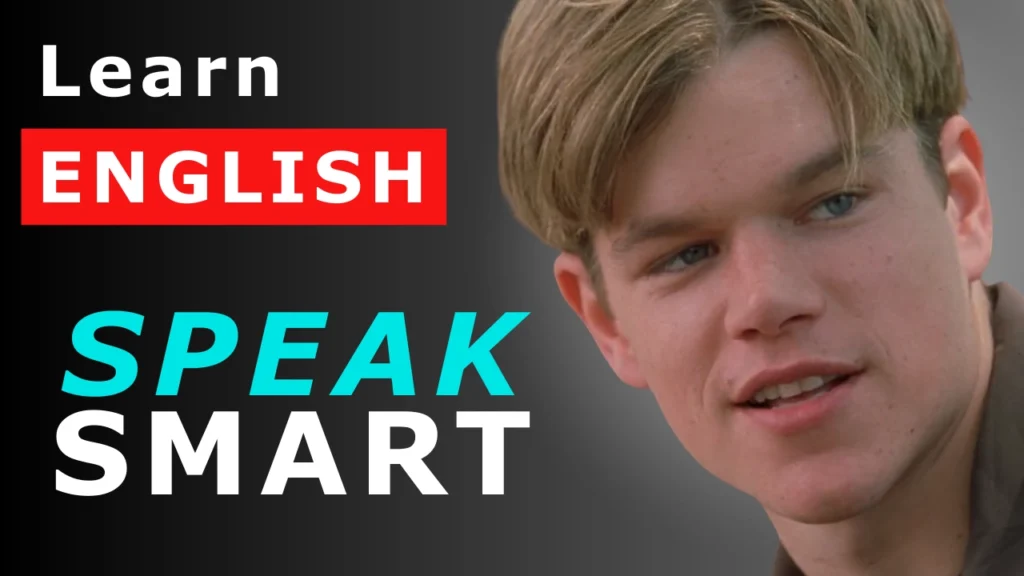
In this scene from Good Will Hunting, Sean (Robin Williams) sits with Will on a park bench and does something nobody has ever done before: he sees straight through him. Not his intelligence, not his bravado, but the scared, abandoned kid underneath. This lesson covers 16 words and phrases from one of the most quietly devastating scenes in cinema.
Key Terms
■ To not have the faintest idea means to know absolutely nothing about something.
✔ Always used in the negative. More emphatic than simply saying “I don’t know.”
► “He stood at the open hood of the car and didn’t have the faintest idea what he was looking at.”
► “I haven’t the faintest idea where she went.”
■ To give someone the skinny means to share all the details or inside information about something.
✔ Informal American English. Used when asking for the real story or inside scoop.
► “He gave me the skinny on everything that happened at the party last night.”
► “Come on, give me the skinny. What did she actually say?”
■ Everything included. The full package. Used to say you know or are dealing with every part of something.
✔ Informal. Often used when ordering food or describing a complete set.
► “She ordered the deluxe burger with the whole works: fries, soda, and dessert.”
► “Sean knows the whole works about Will’s life, every detail.”
■ An outline or list of topics covered in a course or subject. In the film, used humorously to mean a detailed personal list of favourites.
✔ Standard academic word. The plural is syllabi or syllabuses.
► “He rattled off a full syllabus of Tarantino films, complete with rankings and trivia.”
► “The professor handed out the syllabus on the first day of class.”
■ To emotionally overwhelm or disarm someone with a single look. Eye contact that says everything without words.
✔ Dramatic and literary. Suggests someone whose gaze carries real emotional weight.
► “She didn’t have to say a word. She leveled him with her eyes.”
► “His mother leveled him with her eyes across the dinner table and he went quiet immediately.”
■ To suddenly inhale sharply, usually from shock, fear, pain, or struggling to breathe.
✔ Used both literally and figuratively. A gasp signals a strong emotional or physical reaction.
► “He gasped for air as the cold water closed in around him.”
► “The crowd gasped when the magician made the assistant disappear.”
■ Open to emotional hurt or harm. Letting your guard down and allowing others to see your true feelings.
✔ Common in emotional, romantic, and psychological contexts. Can also mean physically unprotected.
► “She looked vulnerable sitting alone in the hospital waiting room.”
► “Will refuses to be vulnerable because it means risking rejection.”
■ A quote from Shakespeare’s Henry V meaning “let’s go into battle again.” Used to show bravery or willingness to try again despite risk.
✔ Often used with a sense of humour or determination. Signals someone who keeps going despite difficulty.
► “We’re understaffed and exhausted, but once more into the breach.”
► “He took a deep breath and said ‘once more into the breach’ before going back into the meeting.”
■ Overconfident, arrogant, or acting as though you know everything. Often applied to talented people who lack humility.
✔ Informal. Slightly negative. Different from “confident,” which is positive.
► “He walked into the meeting acting cocky, like he already had the job.”
► “Will is brilliant but cocky. He uses his intelligence as a weapon.”
■ Extremely afraid. A strong, vulgar phrase used for emphasis.
✔ Very informal. Never use in professional or formal settings.
► “I was scared shitless before my first stage performance.”
► “He looked calm on the outside, but he was scared shitless.”
■ A person’s pattern of romantic or sexual attraction to others, such as heterosexual, homosexual, or bisexual.
✔ Used in discussions about identity. Important not to assume or judge.
► “He felt safe at university where people respected his sexual orientation.”
► “Sexual orientation is one aspect of identity that is deeply personal.”
■ A famous chapel in Vatican City, known worldwide for its ceiling painted by Michelangelo. A symbol of extraordinary human achievement.
✔ Used as a cultural reference for beauty, awe, and the pinnacle of creative effort.
► “He stood beneath the Sistine Chapel, overwhelmed by its scale and beauty.”
► “Sean uses it to show Will that knowing about art is not the same as experiencing it.”
■ To assume something is true without knowing all the facts. Can sound arrogant when applied to another person’s private experience.
✔ More formal than “assume”. Often used when someone makes an unwarranted claim about what others feel or think.
► “Don’t presume someone is poor just because they dress simply.”
► “Sean tells Will: you presume to know everything about me from one painting.”
■ A 14-line poem, usually about love, written in a specific rhyme structure. Associated especially with Shakespeare.
✔ Shakespeare wrote 154 sonnets. Sonnet 18 (“Shall I compare thee to a summer’s day?”) is the most famous.
► “He quoted a Shakespearean sonnet to express how he felt about her.”
► “A sonnet has a strict structure: 14 lines, usually in iambic pentameter.”
■ A famous novel by Charles Dickens about an orphan boy’s difficult life in 19th-century England. A symbol of hardship, poverty, and resilience.
✔ Used as a cultural reference for poverty, orphaned children, or the classic hard-knock life story.
► “Just because I grew up poor doesn’t mean my life was like Oliver Twist.”
► “Will’s childhood echoes Oliver Twist: abandoned, passed around, surviving on his wits.”
■ To sum up or represent the essential quality of something in a concise way.
✔ Common in writing, analysis, and discussion. Used when one thing perfectly represents a bigger idea.
► “The final scene encapsulates the entire message of the film.”
► “That one sentence encapsulates everything Sean is trying to tell Will.”
1. What does “I haven’t the faintest idea” mean?
a) I have a rough idea
b) I know absolutely nothing about it
c) I’m not sure, but I can guess
2. If someone is described as “cocky,” what does that mean?
a) They are shy and quiet
b) They are overconfident and arrogant
c) They are nervous and unsure of themselves
3. What does it mean to “presume” something?
a) To prove something with evidence
b) To ask for permission
c) To assume something without knowing all the facts
4. “Once more into the breach” comes from which Shakespeare play?
a) Hamlet
b) Henry V
c) Romeo and Juliet
Answers: 1-b, 2-b, 3-c, 4-b
Download the vocabulary breakdown sheet — definitions, examples, and exercises you can actually study with.